Sea days used to be dead air. You packed a paperback, queued for trivia at eleven, and gave up on your phone somewhere around the third loading spinner.

That era’s over. 72% of modern cruise travelers now use Starlink Wi-Fi for casual sea-day mobile gaming, and the mix is broader than you’d guess.
Some of it’s Wordle and Candy Crush. A growing share is the free-to-play social casino category, which a Deadspin sweepstakes casino guide now tracks across more than 240 separate brands.
The shift happened fast. Most of the credit belongs to one piece of hardware bolted to the top of your ship.
What Starlink actually changed
Older cruise ship internet ran through satellites parked roughly 22,000 miles up. Every click had to make that trip twice before anything showed up on your screen. The delay was brutal, fine for email but useless for anything you actually wanted to interact with.
Starlink sits in low Earth orbit instead, a few hundred miles out. SpaceX puts the round-trip delay at around 25 milliseconds, and its maritime product advertises downloads of up to 350 Mbps at sea. Real-world numbers on a packed ship come in lower than that, obviously. But the gap between “lower” and “unusable” is the whole story.
Royal Caribbean moved first, announcing a fleet-wide rollout in August 2022 after a single-ship pilot came back with reviews nobody expected. Carnival Corporation followed. It’s since confirmed Starlink across 100% of its global fleet.
| Cruise line | Starlink status |
| Carnival Corporation brands | Complete across 100% of the global fleet |
| Royal Caribbean | Fleet-wide, installations finished in early 2023 |
| Celebrity Cruises | Began with Edge-class ships, then the rest of the fleet |
| Norwegian Cruise Line | Installed across most vessels |
| Holland America Line | Installed across most vessels |
Why sea days are the pressure point

Port days take care of themselves. You’re off the ship by nine, walking somewhere, eating something, and your phone’s a camera rather than a console.
Sea days are the opposite. There’s real unstructured time, and it lands in predictable places. The hour before the pool deck fills up. The flat middle of the afternoon. That gap between dinner and the evening show. Bad weather shoves all of it indoors at once.
That’s the window. Not long enough for a film and too long to just sit there, which happens to be exactly the shape of demand casual mobile games were built for.
What people are actually playing

Nothing exotic, honestly. It’s puzzle games, word games and solitaire, the same handful of titles people open in a dentist’s waiting room when they’ve got ten minutes to kill.
The category growing fastest at sea is free-to-play social casino apps. They run a dual-currency setup: one virtual currency with no cash value, plus a second promotional one, structured to sit outside real-money gambling rules.
Whether any of them work for you depends a lot on where you live. Connecticut and Montana have banned the model outright.
New York’s Attorney General sent cease-and-desist letters to 26 platforms, and several more states have bills moving.
Two things make these fit a ship better than the alternatives. They’re built for short sessions, so a dropped connection costs you nothing. And they’re light, which matters more than anything else on a shared satellite link.
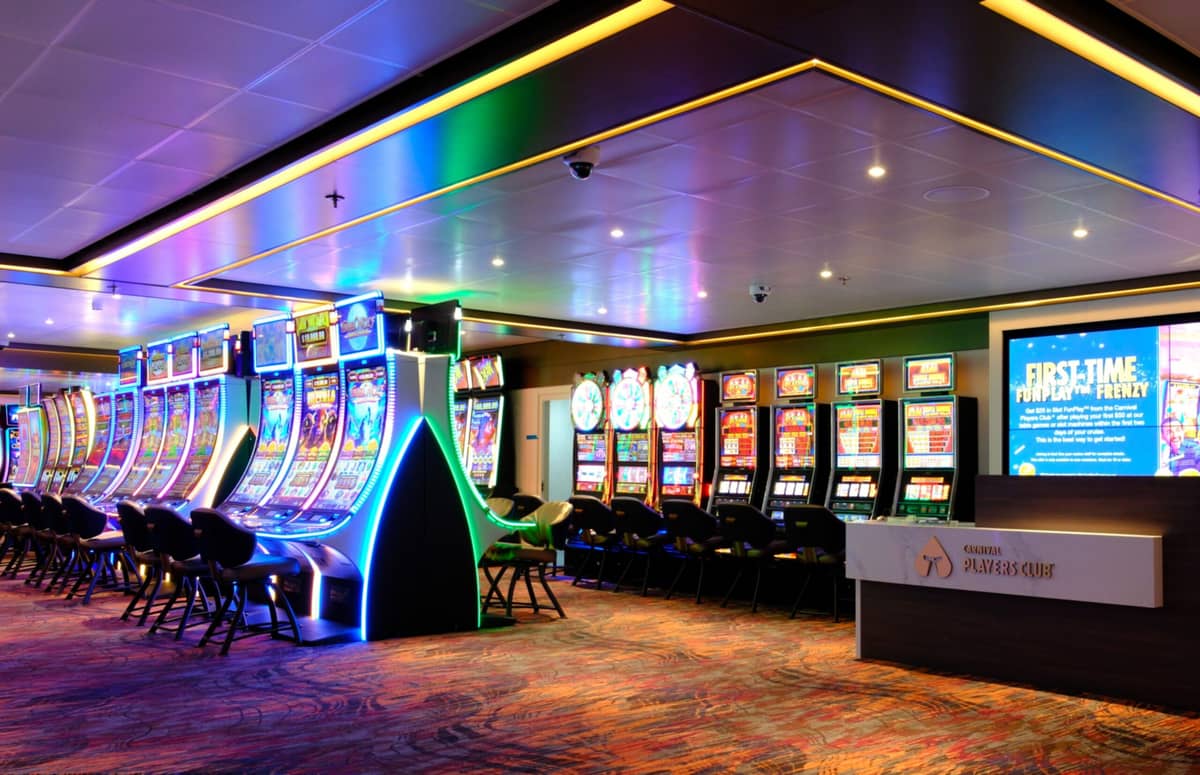
Worth saying plainly: none of this replaces the ship’s own casino, and the onboard floor still closes in port and in territorial waters. Two different activities that happen to overlap on a Tuesday afternoon.
The Wi-Fi package math
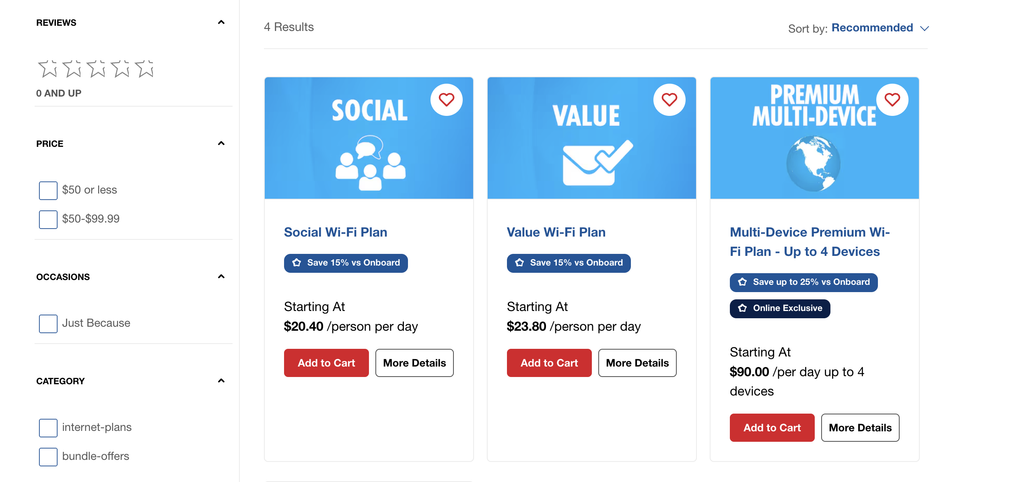
Ship internet is still sold by the day and still priced like a minibar. Most lines run tiered plans, the cheapest throttled hard and the top tier sold as streaming-capable.
For casual gaming you almost never need the top tier. A puzzle app moves a trivial amount of data. What you’re really buying is a stable connection, not a fast one, and the entry plan usually gets you there.
The Points Guy keeps a line-by-line breakdown of what each line charges, and it’s worth reading before you commit at the counter onboard.
Loyalty tiers change the sums a lot. Plenty of repeat cruisers get free or heavily discounted minutes, and on some lines that covers a full week.
Getting a clean connection on a sea day
A few habits genuinely help:
- Buy before you board. Pre-cruise pricing beats the onboard rate on almost every line.
- Avoid the crush hours. Everyone piles onto the network right after the morning announcement, then again around dinner.
- Turn off background uploads. Photo backup will quietly eat your whole plan while you’re at the pool.
- Move toward open sky. Interior corridors and low decks are the worst spots on any ship.
- Download before you sail. Anything cached on airport Wi-Fi is one less thing fighting for the satellite.
None of it’s complicated. It’s just the difference between a connection that works and one you complain about at dinner.
The bigger point
Cruise lines spent two decades treating internet as a grudging amenity. Starlink turned it into something passengers plan around, and you can see the effect on any pool deck. The paperback hasn’t disappeared. It’s just got competition it didn’t have three years ago.