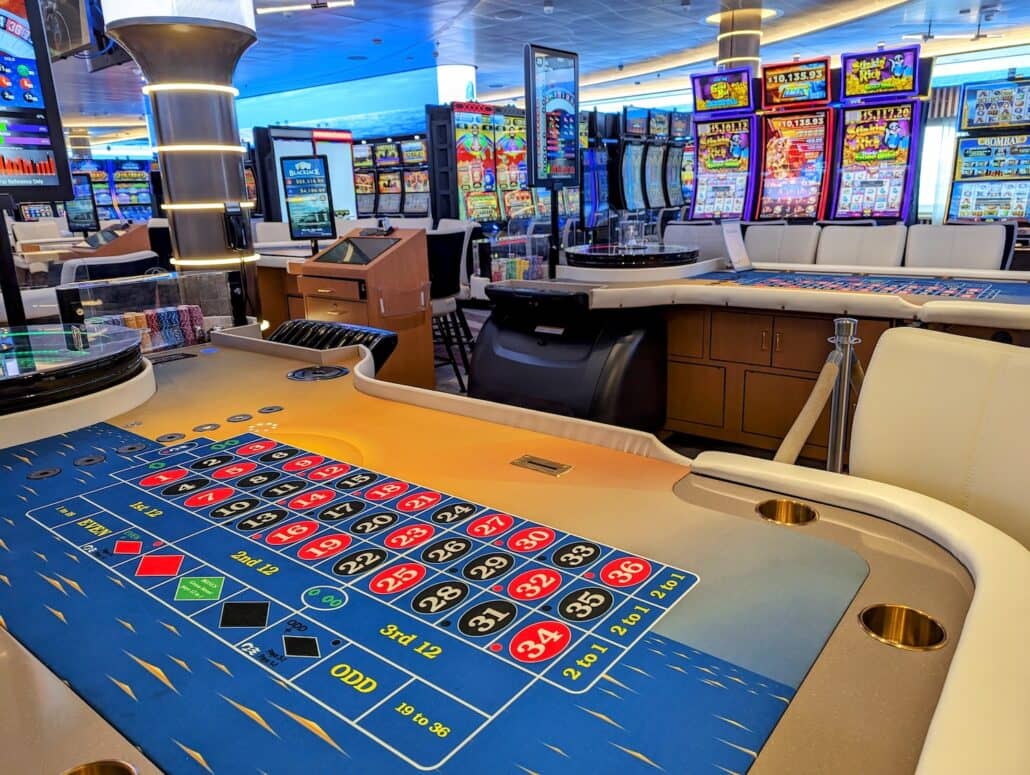
Walk through a cruise ship’s casino while the vessel is docked in port, and you’ll likely find the slot machines turned off and the gaming tables closed.

Return later that evening, after the ship has sailed, and the casino may be one of the busiest places onboard.
For passengers who enjoy gambling during their cruise, casino operating hours depend on more than the ship’s daily schedule. Maritime regulations, local gambling laws and the vessel’s location all help determine when gaming can take place.
Those restrictions also highlight some important differences between gambling aboard a cruise ship and playing through an online casino, particularly when it comes to operating hours, payment methods and legal requirements.
The casino only opens once the ship says so

Cruise casinos are bound to geography. In American waters, a ship typically has to be about 12 nautical miles from shore before the casino can switch on. It closes again the moment the ship sails back inside that line, whether that’s returning to its home port or calling at an island along the route.
Since a 1982 international agreement, territorial waters extend 12 nautical miles from the coast, and a US federal law dating back to 1948 bans gambling ships from operating inside American territorial waters altogether. A day spent island-hopping can mean a casino floor that opens and closes several times before dinner.
Whose rules actually apply is not a simple question
Once a ship clears that line, the law that governs its casino usually isn’t American, British, or whatever passport most guests are carrying. It’s the law of the country the ship is registered in, and most large ships are registered somewhere like the Bahamas, Panama, Malta, or Bermuda.
Registering abroad this way is a well-established and openly debated industry practice, and one consequence is that US laws do not apply in the international waters, and passengers are at the mercy of maritime law instead.
That is written directly in the rules players meet at the table. Royal Caribbean’s own policy sets the minimum age to gamble at 18 on most sailings, but 21 specifically for Alaska cruises.
The difference makes sense once you know it’s tracking regional legal requirements. Compare that with an online casino, where the license a site holds, not the sea it happens to be sailing through that week, sets the rules once and keeps them consistent for every player who logs in.
“Cash play” mostly isn’t cash anymore

The image of a cruise casino as a strictly cash-in-hand affair is out of date on the larger lines. Royal Caribbean runs its tables and slots on a cashless system tied to each guest’s onboard account, and the limits are specific: up to $10,000 a day, split evenly between $5,000 for slot machines and $5,000 for table games.
Guests can fund that account before boarding with a credit card or a wire transfer, or top it up at an ATM once on board. Table game transactions carry a convenience fee unless a guest holds a high enough loyalty tier to have it waived.
That’s still a meaningfully different experience from playing online. The daily cap resets the next calendar day rather than the moment a player wants to keep going, and the ATM fee is real money leaving the account before a single hand is dealt. Everything is denominated in whatever currency the cruise line’s onboard account runs on, regardless of what a guest actually earns or banks day to day.
Online, none of the geography applies
An online casino doesn’t wait for international waters, because there’s no ship and no coastline to clear. It operates under one license, published and checkable, rather than a flag-state arrangement. And a crypto-friendly site skips the currency conversion and the onboard credit line entirely, moving funds directly from and to your crypto wallet.
So, a quick spin of Bitcoin roulette by Sportbet.one casino site settles in the same currency it was funded in, with no shipboard exchange rate sitting in between.
The two worlds have started overlapping, too. Most large ships now carry Starlink, which has replaced the old, laggy satellite connections with something fast enough for actual online gaming from a cabin, deck chair, or anywhere else on the ship. That means a guest can, in principle, log into an online casino from the middle of the ocean.
Still, online casinos are tied to whichever jurisdiction licensed them, and licensed operators routinely block access from countries where online betting is against the law or simply unregulated.
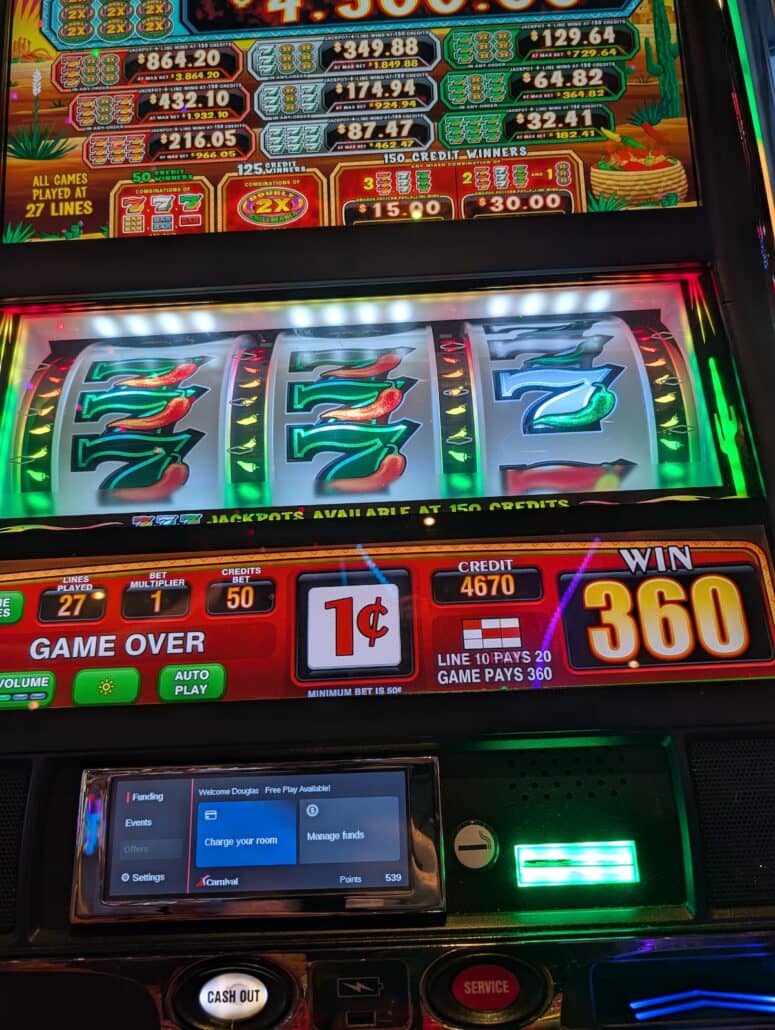
A guest connecting through the ship’s onboard wifi may find a site behaves differently depending on how that connection is routed and which country it appears to come from. In one narrow sense, that makes a casino floor with a fixed set of house rules more predictable than a wifi signal bouncing off a satellite.
None of that makes one option better than the other outright. A cruise casino sells an evening out, a live room, and a schedule that’s part of the itinerary. But it can’t sell what an online casino gives by default: rules that don’t depend on where a ship happens to be floating that hour, and a session that starts the moment a player wants it to.
For cruise passengers, visiting the casino remains a popular evening activity, whether that means playing the slot machines, sitting down at a blackjack table or trying their luck at roulette.
Unlike online casinos, which operate under their own licensing and location requirements, cruise ship casinos must account for changing maritime jurisdictions and restrictions at ports of call.
Passengers planning to spend time in the casino should check the ship’s daily schedule for operating hours, particularly on port days. And regardless of whether gambling takes place online or aboard a cruise ship, setting a budget and understanding the rules can help keep it an entertainment activity rather than an unexpected expense.
Were you ever surprised about the casino rules at sea? Let us know.