Many who tuned in to livestreams expecting to see the SS United States go to her watery grave in less than an hour wound up spending far longer waiting for the big moment. While the historic vessel did eventually submit to the controlled sinking which allowed her to become the world’s largest artificial reef, it took far longer than expected.
Why The Ship Sank So Slowly
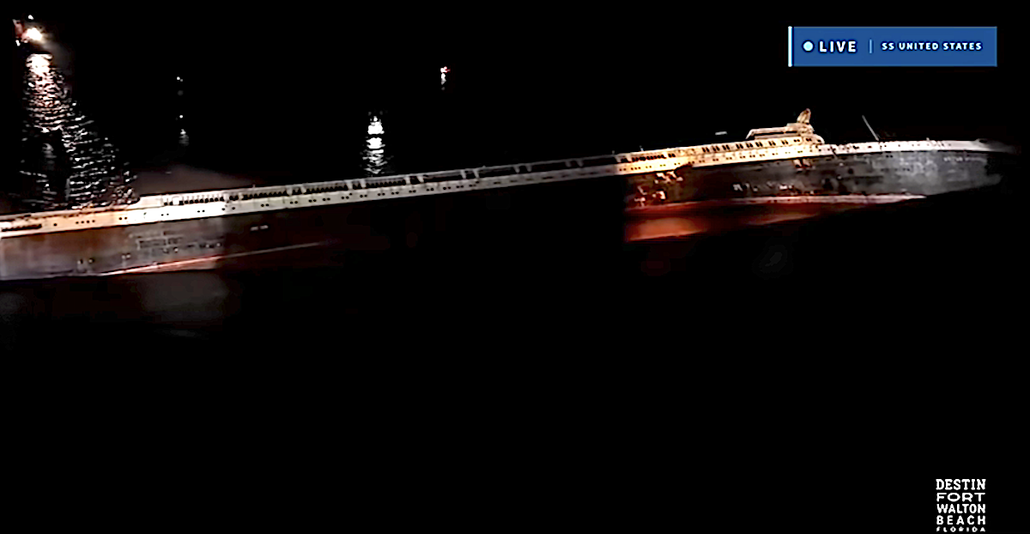
Having made over 800 transatlantic voyages over the course of her active life, the SS United States seemed determined to enjoy every last moment of her time in the spotlight. While the ship was originally expected to take about 45 minutes to take on water and submerge, she remained afloat as day turned to dusk and, eventually, night fell.
Finally, at around 9 p.m., the ship — which by that point had partially capsized — gave up the good fight and, with plumes of water shooting out of the gaping holes which had once been portholes, disappeared into the murky depths.
According to the Associated Press, the much slower than anticipated event unfolded as it did at least partly due to crews needing to fill nearly 130 onboard tanks with water in order to assure that it would rest evenly on the ocean floor.
That process “took longer than we thought” it would explained Nick Tomecek, a spokesperson for Okaloosa County.
Why Explosives Were Not Used

Many watching the controlled sinking wondered why those behind the project didn’t simply blow a hole in the bottom to expedite the process. But Tomecek said that federal environmental rules — as well as those regarding the use of explosives — prevented them from doing so.
Ultimately, the ship actually wound up sinking a day earlier than originally intended. Why? Concerns about a potential weather front caused organizers to move the sinking forward a full day.
Ultimately, the goal is for the ship’s new location, about 20 miles off the coast of Florida, to be part of what Tomecek called “the best diving destination in the world.”
Read More: The SS United States’ Final Voyage