On my first night aboard Costa Toscana, I ordered an Aperol Spritz with dinner. Or at least I tried to.
The waiter explained that the dining room served beer and wine, but not cocktails. If I wanted an Aperol Spritz, I’d have to visit one of the ship’s bars.
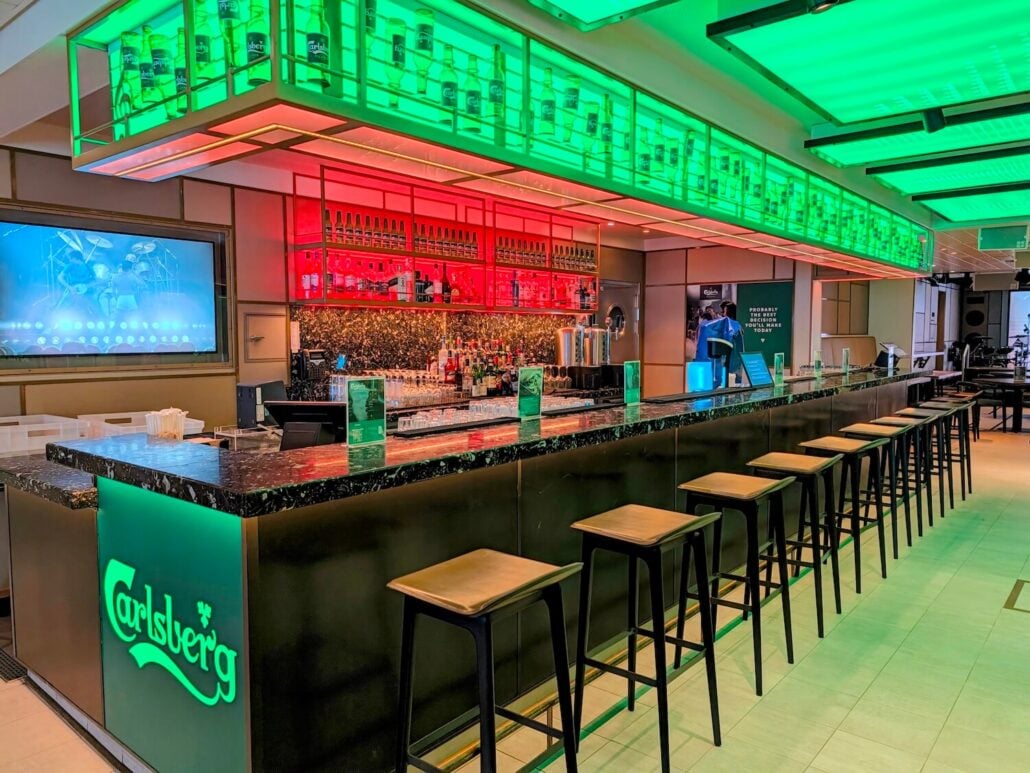
The Carlsberg pub was only steps away from the main dining room, so this wasn’t a big inconvenience. It was, however, something that caught me by surprise. And it’s one of the things which inspired this particular piece.
After nearly 18 years of covering the cruise industry, I’ve grown accustomed to how the mainstream American cruise lines operate. But sailing with a European cruise line like Costa reminds me that not everyone follows the same playbook.
Some differences are minor, some considerably more major. In the case of this ship, I didn’t encounter anything that would make me reconsider booking again. But there were a few things I wish I’d known in advance.
Hopefully, if you’re planning a trip on Costa Toscana, this piece will provide that kind of guidance to you!
I shared some of my initial observations in my Costa Toscana first impressions, but after spending a full week aboard, I came away with a better understanding of what American cruisers should expect.
Don’t Let the Language Differences Intimidate You
One of the first things you’ll notice aboard Costa Toscana is the number of languages being spoken by both crew and passengers.
During my Mediterranean sailing, I regularly heard Italian, French, German, Spanish, and English. The mix naturally changes depending on who’s sailing that particular week.
Announcements are made in several languages, which means they can take a little longer than what American passengers might be accustomed to. Those who have sailed MSC would be familiar with this, if to a slightly lesser extent.
But here’s something I want to stress: I never had a problem communicating with the crew.
Many of the crew members I encountered were from the Philippines and Indonesia, and English was widely spoken among those I interacted with.
I’ve been learning Tagalog, also known as Filipino, over the past several months, so I had some fun practicing with crew members hailing from the Philippines.
I’m pretty sure I butchered the language more often than I got it right, but they were good sports about it.
Costa also had an English-speaking host named Alex who helped explain activities and made sure English-speaking passengers understood what was happening.
At no point did I feel like I couldn’t fully enjoy the ship because I didn’t speak another language.
But I want to go back to the announcements for a moment. At a certain point, I noticed that some were seeming repetitive. It seemed excessive and unnecessary… until I made a realization.
Because passengers can embark at numerous ports, every day is effectively embarkation (or disembarkation) day for somebody.
In this situation, you can’t simply make an announcement on the first day and assume on day two that everyone aboard has heard it. New passengers are joining the ship throughout the itinerary.
Entertainment That Doesn’t Need a Translation
One of the more interesting differences between Costa and most American lines is in how they approached entertainment.
Think about it. If you have passengers speaking five or six different languages, a traditional stand-up comedian probably won’t connect with a big chunk of his audience.
For this reason, Costa leans heavily into visual entertainment, and it’s an approach I thought worked particularly well.
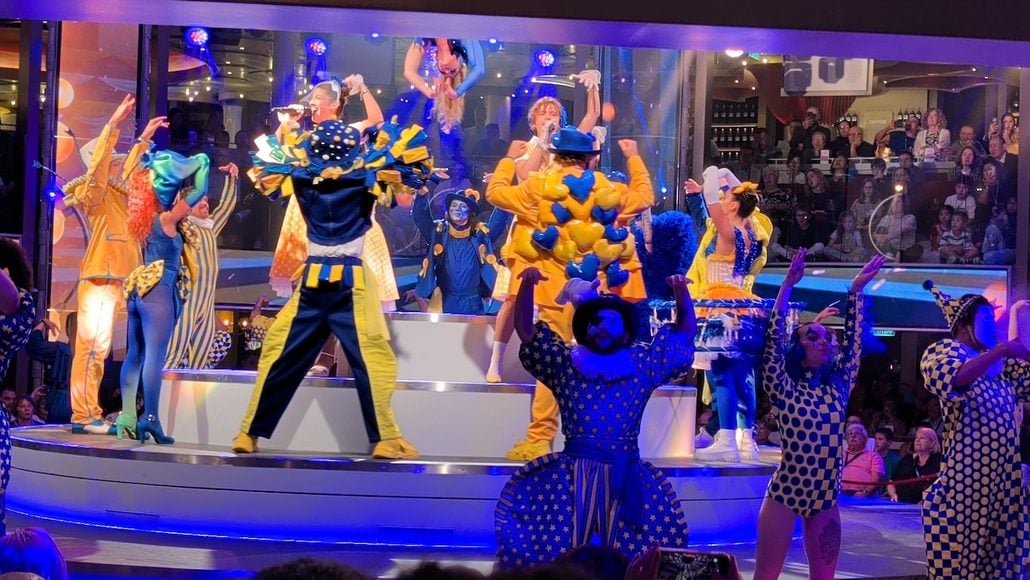
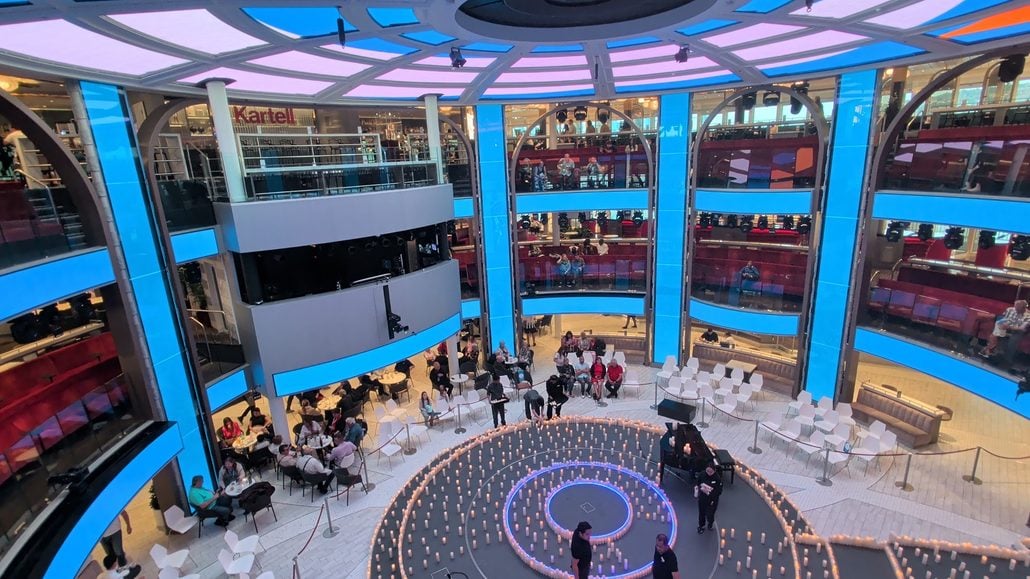
The ship’s Colosseo is the entertainment hub, hosting productions that rely on music, dancing, acrobatics, and impressive staging rather than spoken dialogue.
Even when the lyrics to a song might be in a language you don’t understand, music is far less challenging than anything involving spoken word.
What became increasingly clear throughout the cruise was how effectively these productions worked for an international audience.
At times, the stage would rise from the floor to form a tiered birthday cake-like design which allowed for constantly changing visuals.
I covered more of the ship’s entertainment and daily routine in my Costa Toscana trip report, including how the atmosphere changed between port days and sea days.
Other productions incorporated aerial acrobatics and dramatic lighting.
And judging by how quickly seats filled across decks six, seven, and eight, the performances were popular with guests.
The shows were something everyone could enjoy regardless of the language they spoke.
Dinner Runs Like Clockwork
One thing I particularly appreciated about Costa’s dining operation was how efficiently everything moved.
Dinner was highly regimented, with very little downtime between courses. From the starter through the first and second courses and dessert, the service moved along at a steady pace.
Personally, I loved it. I’ve never been one of those people who enjoys lingering over dinner for a couple hours.
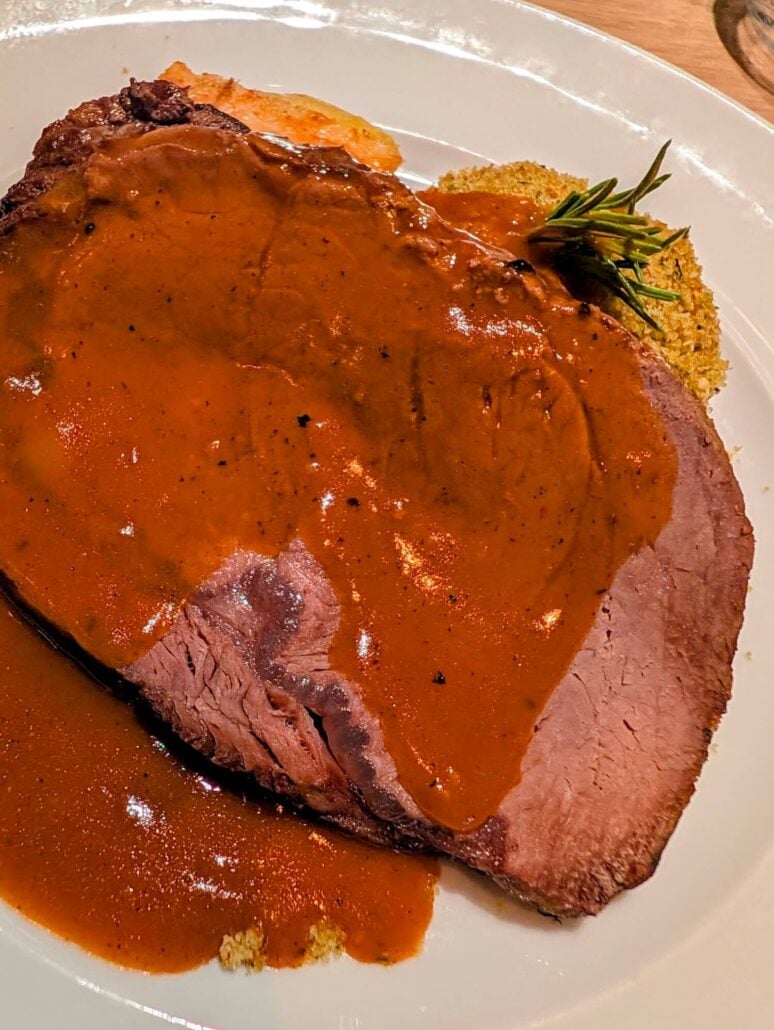
I don’t particularly enjoy sitting around waiting 20 minutes between courses, especially after spending a full day exploring a port.
Here, the food came out quickly. And although we, as diners, knew there was another seating following ours, I never felt rushed through the actual meal.
Considering I’d spent much of the week eating my way through Italy’s supply of pizza, I was perfectly happy with what was being served.
For passengers accustomed to taking their time over dinner, Costa’s approach might take a little getting used to.
But for me, the efficiency was a big plus.
The Ship Has a Lively Atmosphere
Having sailed aboard virtually every new major American cruise ship over the past 18 years, I can say Costa Toscana certainly doesn’t lack energy.
There were plenty of families aboard during my sailing, including a noticeable number of German families who were traveling during a school break.
I did notice that passengers didn’t necessarily strike up conversations with strangers as frequently or casually as I’ve experienced on some Caribbean cruises.
I suspect some of that comes down to the language barriers. It’s harder — and a bit intimidating — to initiate a conversation when you’re not sure what language the other person speaks.
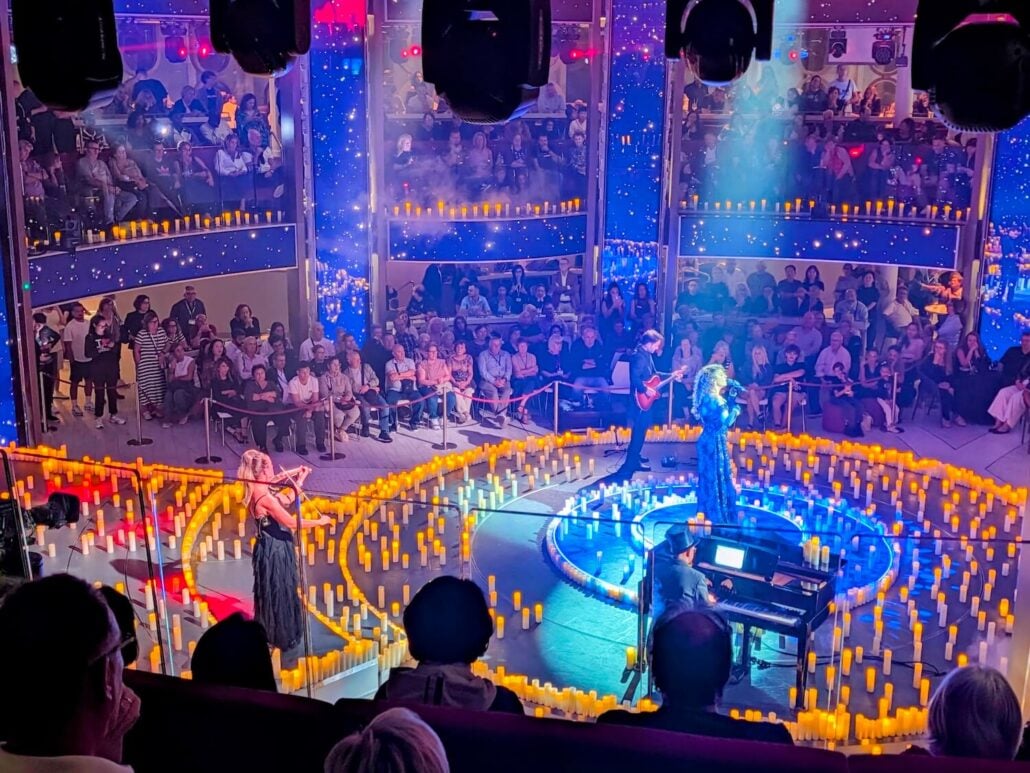
But that certainly didn’t mean the ship was quiet.
In fact, Costa went to considerable lengths to create an engaging atmosphere throughout the public spaces, both individually and collectively.
On some evenings, music was played over speakers around the ship. Meaning the same music in multiple venues. Initially, I thought that was a little odd, being used to wandering a ship and enjoying different music in a variety of spaces.
Then I realized what Costa was doing. It was about creating a shared experience as opposed to several individual ones.
There were also several themed evenings, including Black Night, Spanish Night, and Italian Night, and the music helped establish the atmosphere.
It reminded me a little of how Virgin Voyages uses music and themed activities to create a specific ship-wide vibe during Scarlet Night, although Costa’s approach was spread across different evenings.
Once I understood what they were going for, it made more sense.
With passengers joining and leaving at different ports, there was always someone experiencing these themed evenings for the first time.
A Few Practical Things Worth Knowing
There were several smaller differences that I think American passengers should know before sailing.
First, the Costa app was straightforward to use.
The daily activity schedule was available there, as well as other information about shipboard life. I used the app to keep track of the day’s events.
I didn’t receive a printed daily schedule, making the app even more important. I’d recommend downloading the app before boarding and taking a little time to get familiar with it. There was also a QR code on my cabin mirror that I could scan to pull up the daily schedule.
The euro was the onboard currency for my Mediterranean sailing, which was pretty much what I’d expected.
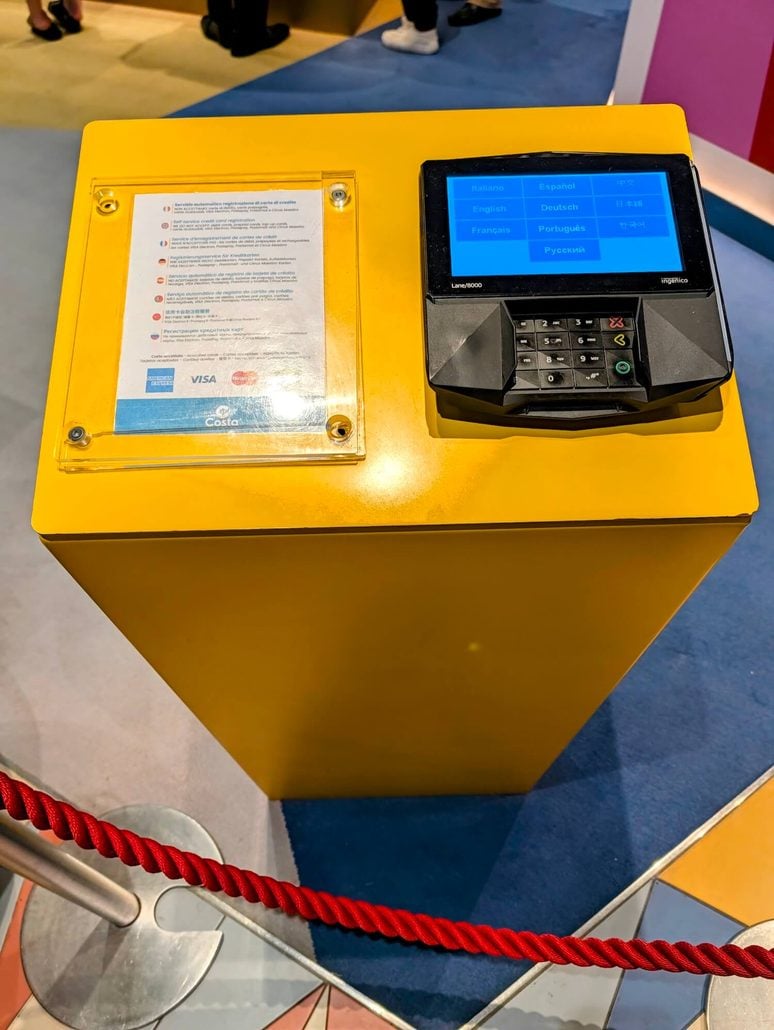
Another thing that surprised me was having to register my credit card after boarding. On American cruise lines, that’s something you typically do before setting foot onboard. I had already registered my card during check-in, but I still had to register it again once aboard.
Costa has kiosks where you can register the card you want associated with your onboard account, something that needs to be done within 48 hours of boarding.
I liked that the kiosks also accepted euros, allowing passengers to set up a cash account or pay off their balance without having to stand in line at guest services.
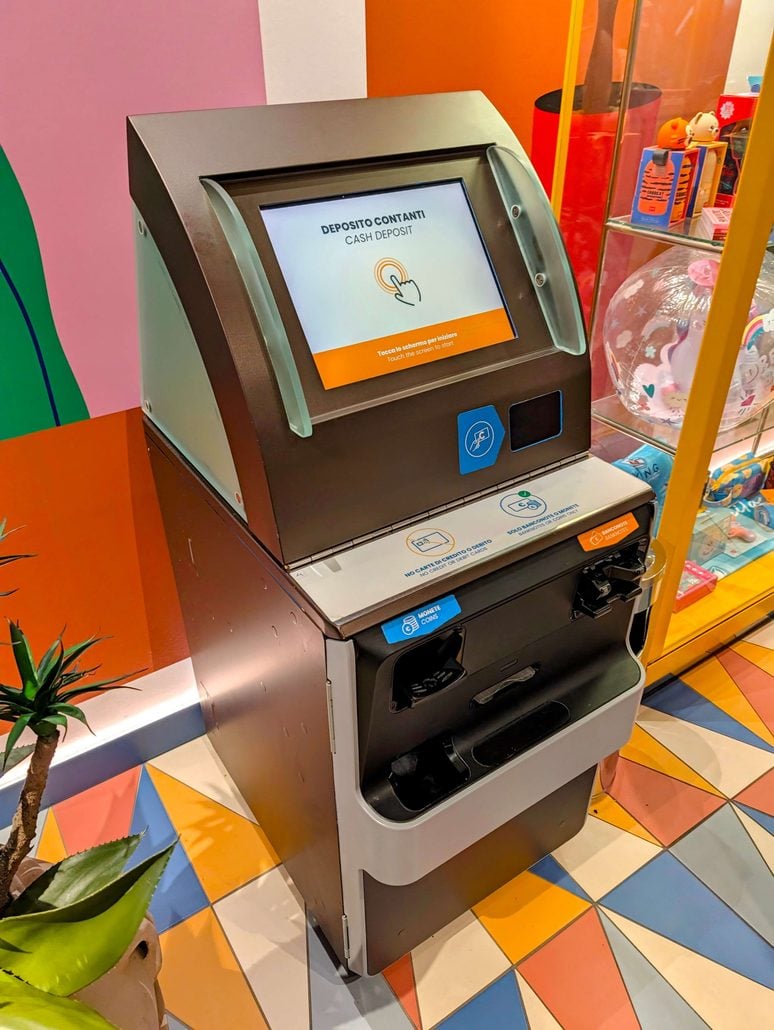
If you expect to need cash during port visits, I’d recommend having some euros on hand before boarding. There was no ATM onboard, so if you needed additional cash, you’d have to find one ashore.
For a closer look at onboard spending, including specialty dining, drinks, Wi-Fi, and other expenses, I also broke down what’s included on Costa Toscana and what costs extra.
Another small surprise involved over-the-counter medications.
I learned that if I needed something like Tylenol or an antacid, I’d have to purchase it through the ship’s medical facility rather than picking it up in one of the shops.
I don’t know whether that’s because of regulations or simply Costa’s policy, but it’s worth knowing. If you’re someone who occasionally needs these medications, I’d recommend packing a small supply.
With the amount of pizza and pasta available, you’d think antacids would be one of the ship’s best-selling items!
One area where I had no complaints was assistance from the crew.
The shore excursion department was well organized, with staff available outside the ship to answer questions and help passengers figure out where they needed to go.
My interactions with guest services and in the onboard shops were also positive and very helpful.
And while elevator etiquette occasionally left something to be desired, that’s hardly something unique to Costa… or Europe. I generally prefer taking the stairs anyway.
What Costa Does Particularly Well
There were also things aboard Costa Toscana that I wish more cruise lines would adopt.
One small thing I appreciated was being able to order an espresso or cappuccino at practically any bar aboard the ship, rather than having to hunt down a dedicated coffee shop.
The Italian food was another highlight, particularly the pizza, pasta, and fresh mozzarella.
I also thought Costa did a good job allocating outdoor space.
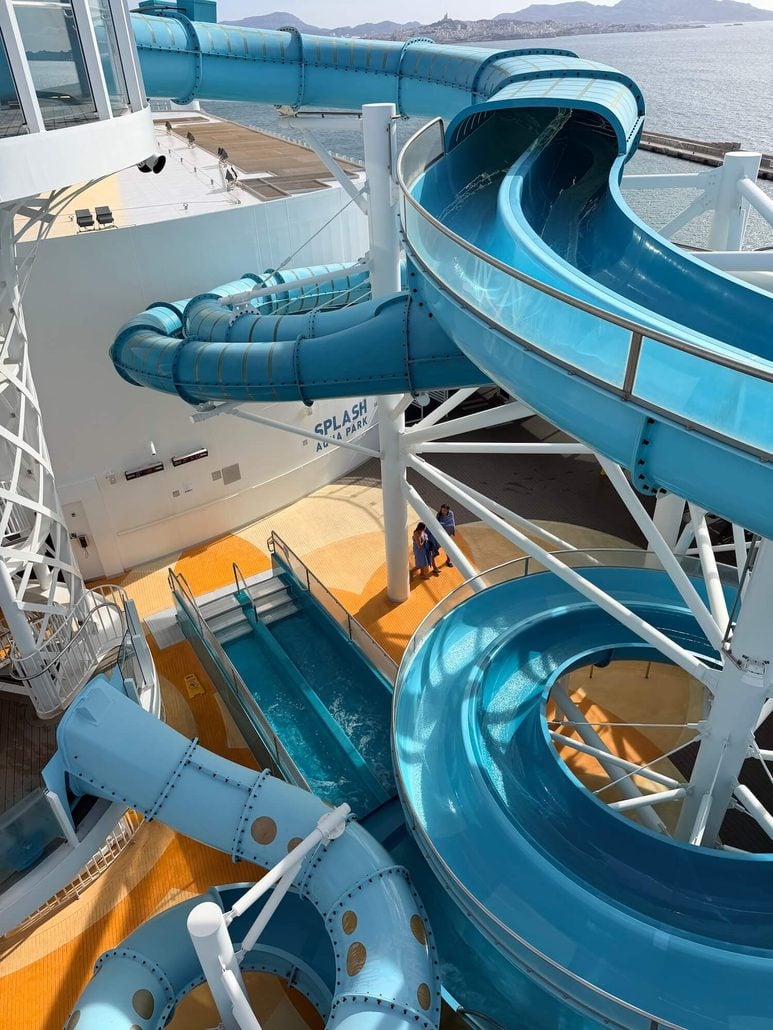
The ship has several pools, including a large covered pool area surrounded by smaller pools, plus an infinity pool aft on Deck 8. The pools were particularly popular with families, as was the water park.
For passengers who enjoy being outdoors, there was plenty of room to explore.
Toward the forward section of the ship, an elevated skywalk offered a different perspective of the ocean.
At the aft, tiered outdoor spaces provided additional places to sit and enjoy the views.
I found the amount and variety of outdoor space impressive for a ship of this size. The connection with the ocean isn’t lost on this one.
Be Prepared for Promotions
One aspect that might catch American passengers off guard is the vigor with which Costa promotes its onboard shops.
Throughout the cruise, I heard frequent announcements advertising sales and limited-time specials in the onboard shops.
I’m not talking about the multilingual announcements, which I understood were necessary. It was the frequency of the retail promotions that became tiresome.
I understand that retail is part of the cruise business, but sometimes, less really is more.
Is it the kind of thing to ruin your cruise? Of course not. But it might prove annoying to some.
Would I Recommend Costa Toscana to Americans?
If someone asked me whether they should book Costa Toscana after years of sailing Carnival, Royal Caribbean, or Norwegian, I’d tell them it might depend on the type of cruiser they are.
You’re not booking Costa to recreate the same experience you’d have on one of those lines. If that’s what you’re looking for, those cruise lines also operate in the Mediterranean.
Costa has its own approach, and after spending a week aboard, I think the company understands the audience it’s trying to serve.
The multilingual environment didn’t create any meaningful problems for me. I enjoyed the structured dining, the visual entertainment was impressive, and the ship had plenty of energy.
Were there things I’d change? Sure. But that’s true of almost every ship I’ve sailed.
I’d have no problem sailing Costa again. I just wouldn’t go aboard expecting a Carnival or Royal Caribbean experience with an Italian accent.
And that’s part of the appeal.
Disclosure: Costa Cruises hosted my October 2026 sailing aboard Costa Toscana. All observations and opinions are my own.