People visiting Alaska’s Denali National Park and Preserve are often rewarded with views that will stay with them throughout their lives.
A herd of Dall’s sheep might be seen perching along the green shoulder of Primrose Ridge, or a golden eagle may be spotted soaring above the colored cliffs at Polychrome Pass. A massive bear might hike over the tundra at Sable Pass, a caribou may appear atop a ridge, backlit by the warm light of the day’s end, or a loon will call from across Wonder Lake.
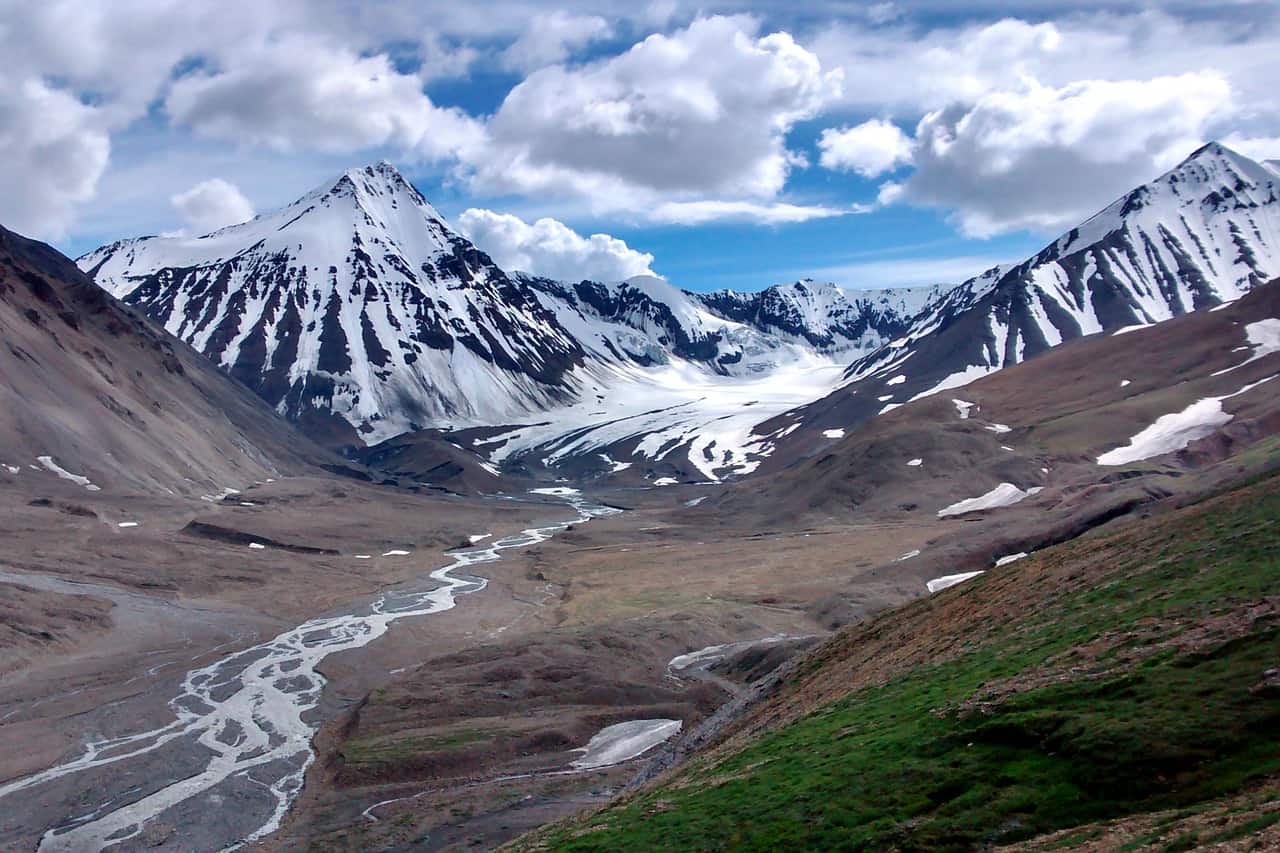
Maybe the park’s tremendous and notorious clouds will part long enough to expose the towering peaks of Denali itself, the highest mountain peak in North America. And although people might be drawn to the area by the snowcapped mountain at the heart of the park, there’s so much more to the park than meets the eye.
History

Cheered by the beauty of the Toklat River, naturalist Charles Sheldon spent nine years lobbying for legislation to build the first national park in Alaska. It was established in 1917 as Mount McKinley, although many Alaska natives continued referring to it as Denali and, in 1980, it was officially renamed that.
The Alaska National Interest Lands Conservation Act (ANILCA) extended the boundaries of this park by about 4 million acres, reorganizing the land into Denali National Park And Preserve.
READ MORE: Guide to Visiting Juneau, Alaska
Interestingly, though they are thought of (and usually referenced) as one entity, Denali National Park is, for the purposes of resource management, a separate entity from Denali National Preserve. The park itself spans around 4.3 million acres, with the preserve covering another 1.3 million acres.
When Is Denali National Park Open?

Situated about midway between Fairbanks and Anchorage, Denali National Park and Preserve can be arrived at by the Parks Highway (Alaska Route 3), the Denali Star Train, or air services into McKinley National Park Airport. Although the park is technically open year-round, approximately 95 percent of visitors arrive between May and September. Most of the park-related services are unavailable during the rest of the year.
Both the train station and airport are within a very short distance of the Denali Visitor Center, which is open from May-September only. Throughout the other three seasons, the Murie Science and Learning Center (MSLC) unofficially takes over the role of the park visitor center.
The third (and maybe the most essential) of the buildings clumped near the main entryway is the Wilderness Access Center (WAC), where travelers can get back-country permits, reserve campsites, buy tickets for the park’s famous bus tours and grab a shuttle bus.
Things To Do At Denali National Park

Even without venturing terribly deep into the park, there is plenty to do, and most of it begins at the visitor’s center. From there, you can arrange day hikes to Triple Lake, the Mount Healy Overlook, and the Taiga Trail to Horseshoe Lake.
Travelers can also visit the Denali Sled Dog Kennels to see a presentation on how they play an important role in helping to patrol the park during the winter months. The paved road finishes at Savage River, where there is a camp and 1.7-mile loop trail that traverses the river on a wooden footbridge.

There is actually only one road in the park, and that 92-mile stretch is aptly named Denali Park Road. During the regular season, private vehicles are allowed to drive up the first 15 miles. After that, only buses are allowed, for both narrated and non-narrated tours. Because of the extremely remote nature of the park, it offers visitors an opportunity to do off-trail hiking in a naturally wild landscape, something which is increasingly hard to do in this country.
It’s important to note that simply getting to Denali is an excursion in itself, given how remote the park is.
For a complete list of suggested activities and other information about the park, click here.