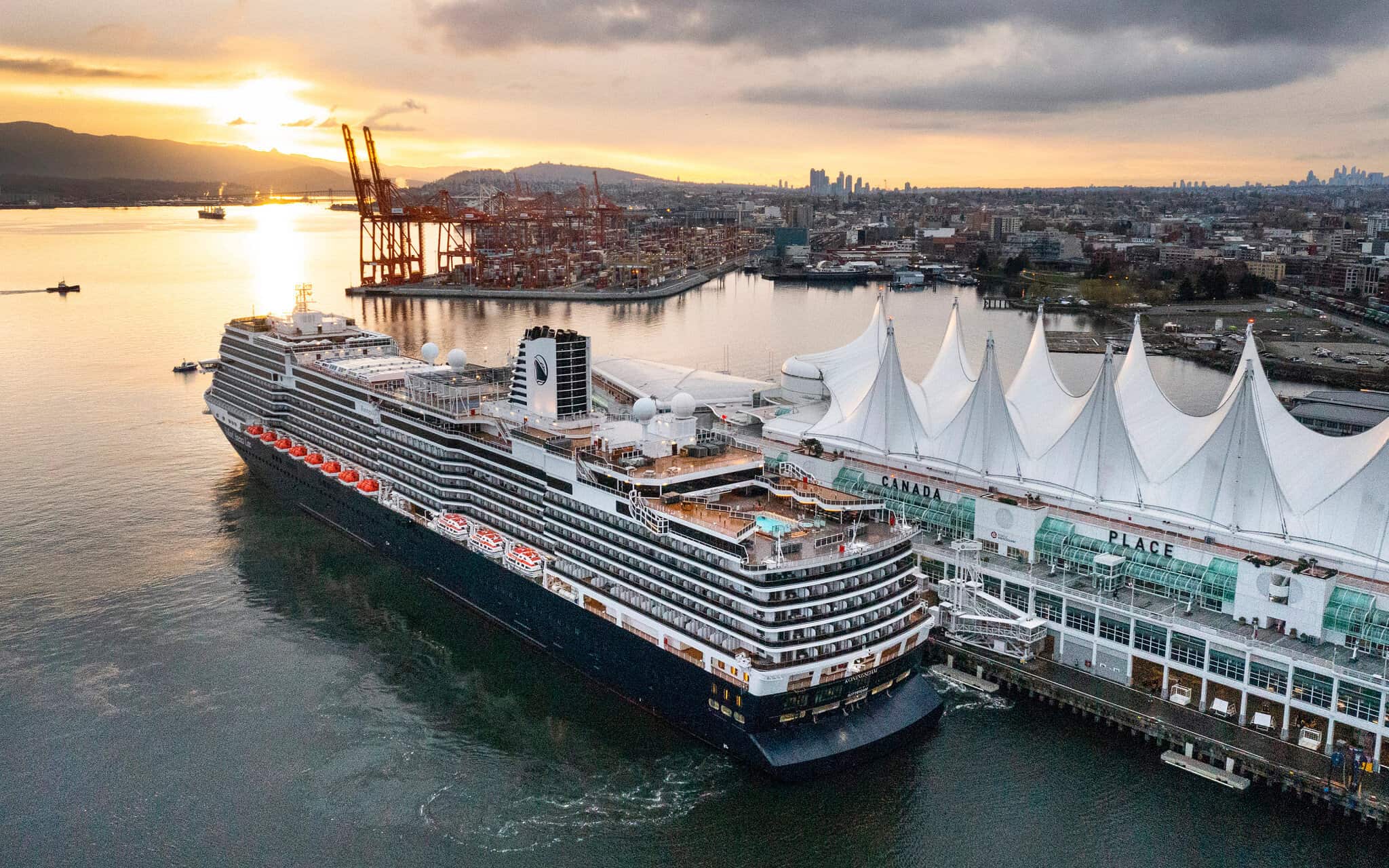
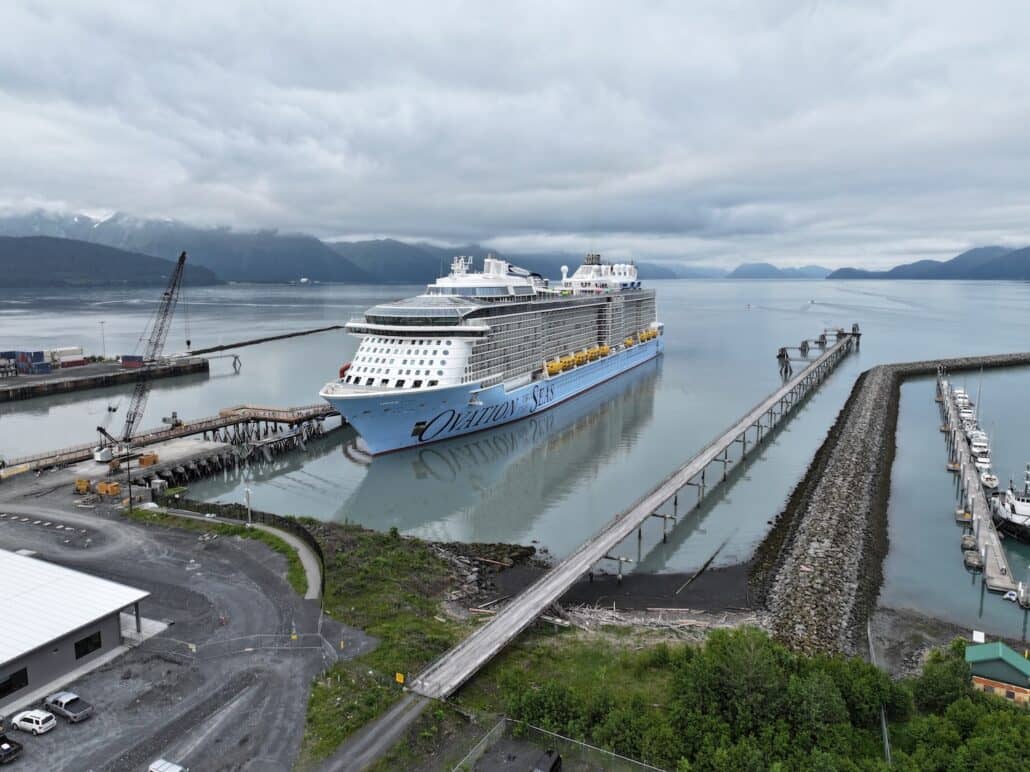
Royal Caribbean’s Ovation of the Seas arrived in Seward, Alaska, on June 19 with a dead fin whale draped across its bow.
A necropsy found the whale, a pregnant 61-foot female, had blunt force trauma consistent with a vessel strike, according to NOAA Fisheries Alaska.
She was freshly dead and in good health beforehand, so she wasn’t already sick or injured. An official cause of death is still pending further lab testing.
Fin whales are endangered, and vessel strikes are a leading cause of large whale deaths worldwide.
Royal Caribbean acknowledged the strike in a statement, saying it was “deeply saddened” and is cooperating with NOAA’s investigation.
The speed question
The Center for Biological Diversity, an environmental advocacy group, analyzed the ship’s AIS tracking data and estimates Ovation of the Seas was traveling 15 to 20 knots through waters where whales gather.
That’s the group’s own estimate, not a confirmed NOAA finding, and AIS data can contain gaps.
The group cites a 2007 peer-reviewed study showing every 1-knot speed increase raises the odds of a fatal whale strike by about 1.5 times.
Under that study’s model, the odds a struck whale dies rise from about 21% at 8.6 knots to roughly 79% at 15 knots.
The Center sent Royal Caribbean a letter on June 24 urging a voluntary 10-knot speed limit in whale habitat.
The company hasn’t responded to the speed reduction request, though it did separately address the while strike itself.
Why it’s getting attention now
The strike happened days after Seward’s new $137 million cruise terminal, now the largest in Alaska, officially opened on June 10 with Ovation of the Seas as its first homeported ship.
Royal Caribbean has committed to bringing at least 140,000 passengers through Seward each season, meaning more ship traffic through the area going forward.
There’s currently no mandatory speed limit for cruise ships in most Alaska waters.
Glacier Bay National Park has one, and voluntary 10-knot slowdowns off California cut whale strikes roughly in half in 2021, according to NOAA.
For passengers, nothing changes right now since no mandatory rule is in place, but if ships are required to reduce speeds, it could impact itineraries.