A cruise should feel freeing rather than tiring, yet modern ships can fill each day with choices; meals, tours, events, spa visits, shows, and night plans compete before noon.

Guests may treat every option as a choice they must weigh, so a better approach keeps plans loose while reducing choices.
Why Small Choices Wear You Down
Big choices receive care, while small ones seem harmless. Yet picking a lunch spot, checking clashing events, and choosing when to dress for dinner all take thought.
Cruise apps add to this strain because they place dozens of events within reach and prompt more checks. Each alert adds an option, even when the current plan was already good.
Signs that too many choices are harming the day include:
- Opening the app without a clear reason
- Checking several similar events more than once
- Rushing between venues to avoid missing anything
- Feeling annoyed during one event because another option exists
- Letting small choices cause strain within the group.
Spotting this pattern matters because rest does not happen on its own; a guest can move between fun events all day and still finish worn out.
Fix Plans and Keep Options Open

Fix What Needs a Set Time
Some cruise plans need an early choice because shore tours, booked meals, spa visits, and major shows may fill up. Treat them as set plans unless a real problem appears. This stops repeat second-guessing. Let dinner at seven form the frame for the rest of the day.
Keep the Rest Open
Trivia, live music, deck events, and simple meals allow more freedom, so treat them as options rather than parts of a full timetable. Choose no more than two main aims each day, such as a tour and night show or a quiet breakfast and pool time. Everything else is an extra, not a duty.
Check Key Details Once
A quick check makes choices easier when it answers key questions instead of adding more options; check how long an event runs, where it is, what it costs, what to wear, and how hard it may be. Then decide whether it fits your time and energy.
Do this once, ideally before the day begins. Reading the same details again rarely helps; instead, it keeps several choices in mind and makes each change feel more pressing.

The same idea works in other forms of adult leisure, where a trusted review site can show online casino games with key facts and demo play so readers can see how each type works before choosing one; on a cruise, quick checks of menus, spaces, and events cut repeat reviews and support sound choices.
Use this quick way to rule things out:
- Remove anything that clashes with a set plan
- Reject options that do not fit the group’s energy
- Skip events chosen mainly from fear of missing something
- Pick the first option left that fits the two main aims.
Know You Cannot Do It All
Modern onboard entertainment serves guests of all ages, tastes, and energy levels, but no guest needs the full range.
| Choice | When to Decide | Simple Rule |
| Booking | Before the trip or early onboard | Commit once |
| Daily aim | The night before | Choose no more than two |
| Extra event | Near the start time | Go only if it still appeals |
| Rest time | Protect it early | Do not fill it by default |
Missing karaoke during dinner is not bad planning; it means choosing one good moment over another. Guests feel better when they value joy, not missed events.
Set Rules for the Cruise App
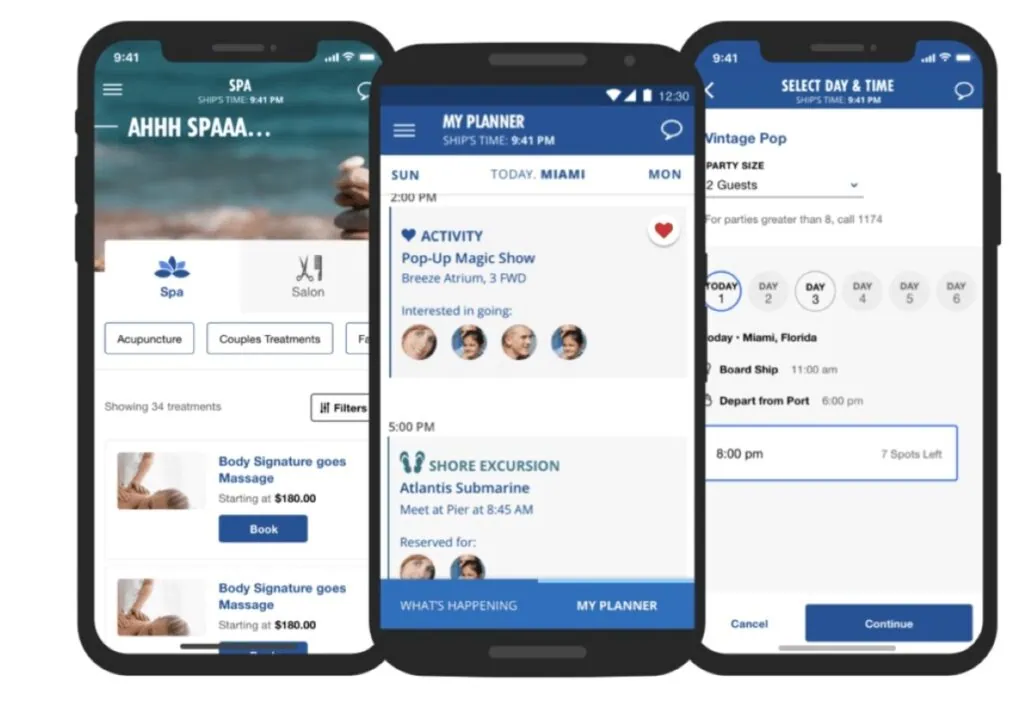
Check the app at set times after breakfast and before dinner, turn off sales alerts, and avoid opening the schedule during events unless a need arises.
This limit can reduce information overload, the APA term for input that exceeds a person’s ability to process it; the app should answer a question, not start another search.
Let Groups Split Up Without Conflict

Travel companions need not share one plan; agree on shared times, such as dinner, while allowing other plans. One person can join a talk while another rests.
Time apart can make shared time better because no one spends the day at events they did not want. Before splitting up, confirm a meeting place and time, which also prevents constant messages and pressure to give way on every choice.
Leave Room for a Real Vacation
A good cruise plan gives shape without ruling every hour; fix key bookings, choose two main aims, reject poor fits fast, and let extras stay optional.
Treat missed options as part of the ship’s range, not proof of a failed trip. The goal is not to finish the schedule but to make the cruise fun and easy to remember.