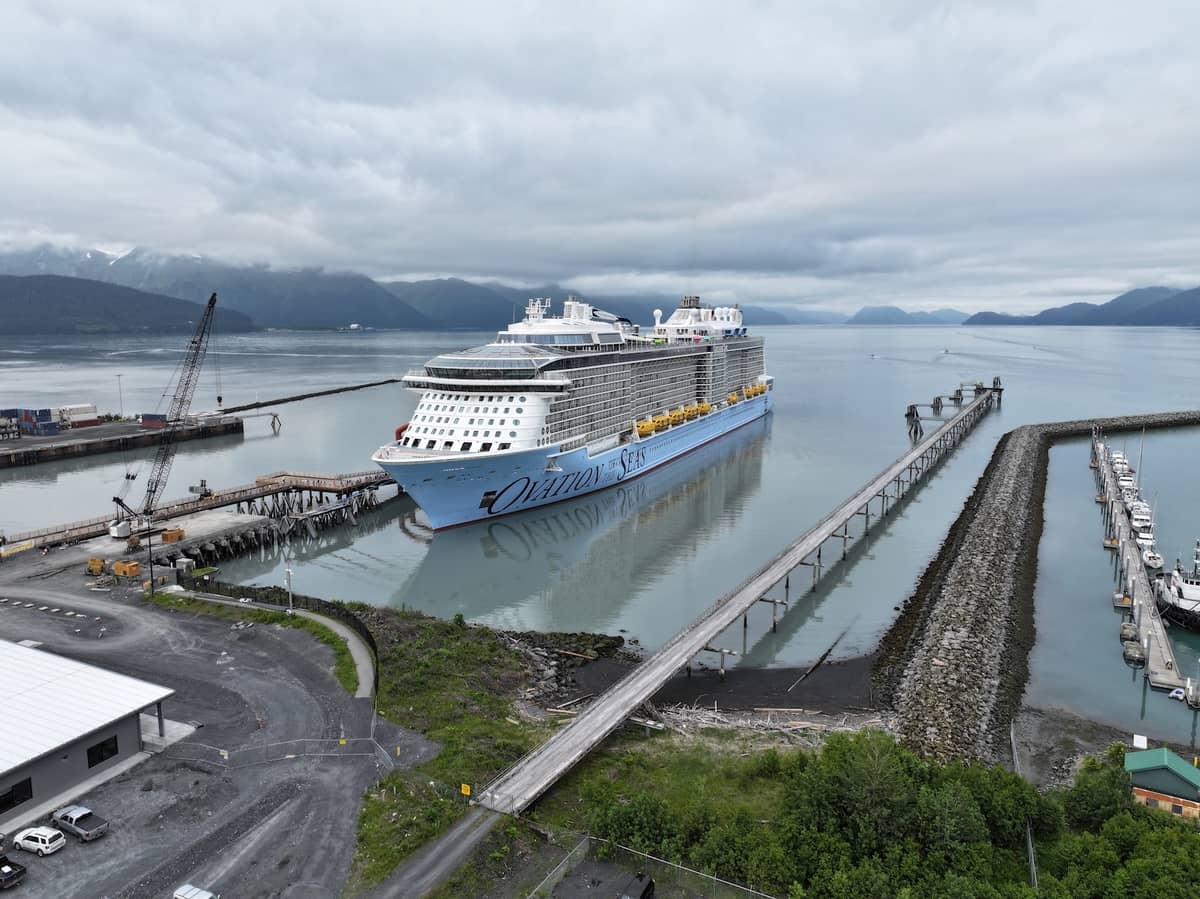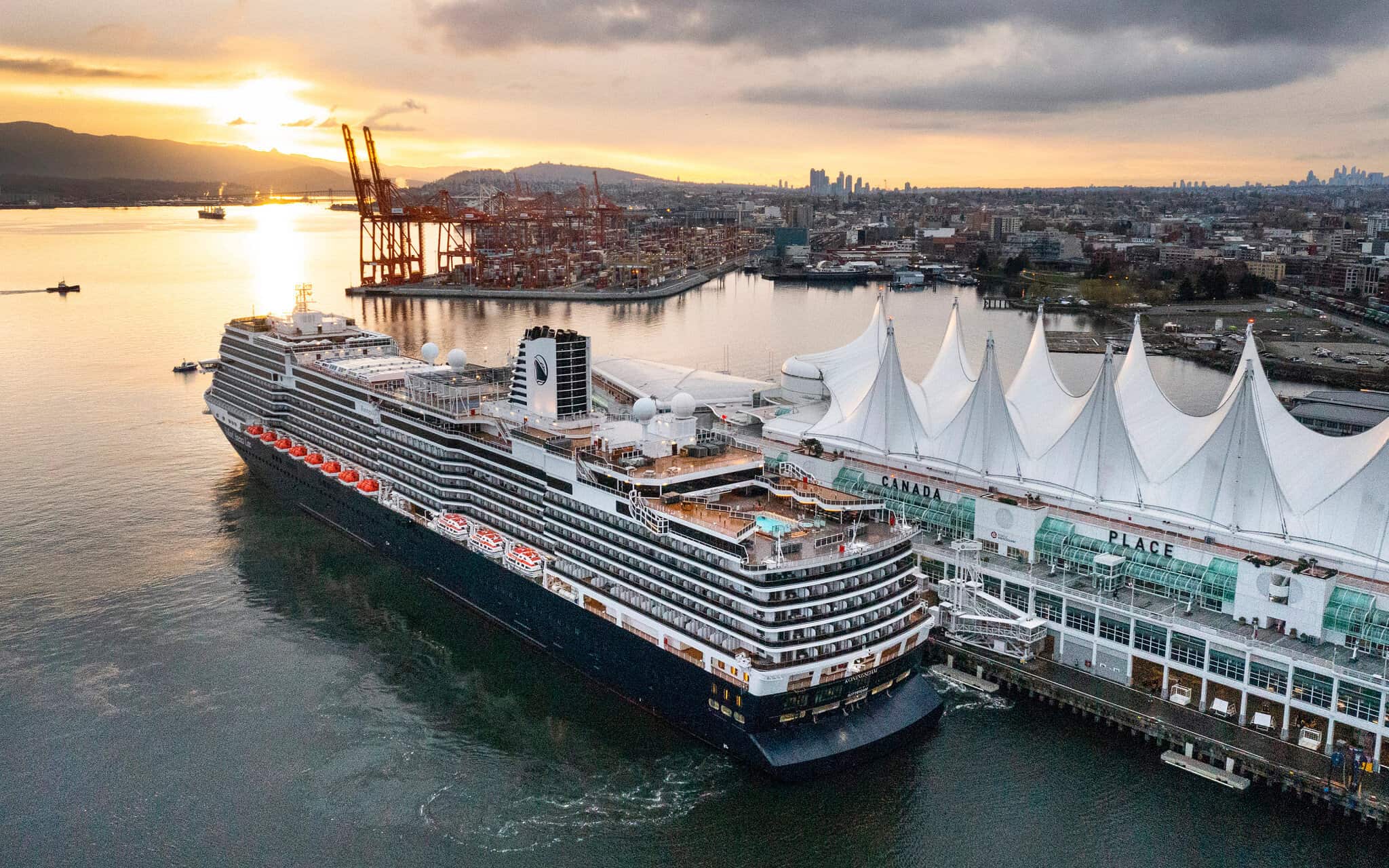
The cruise ship casino has its own gravity. Really.
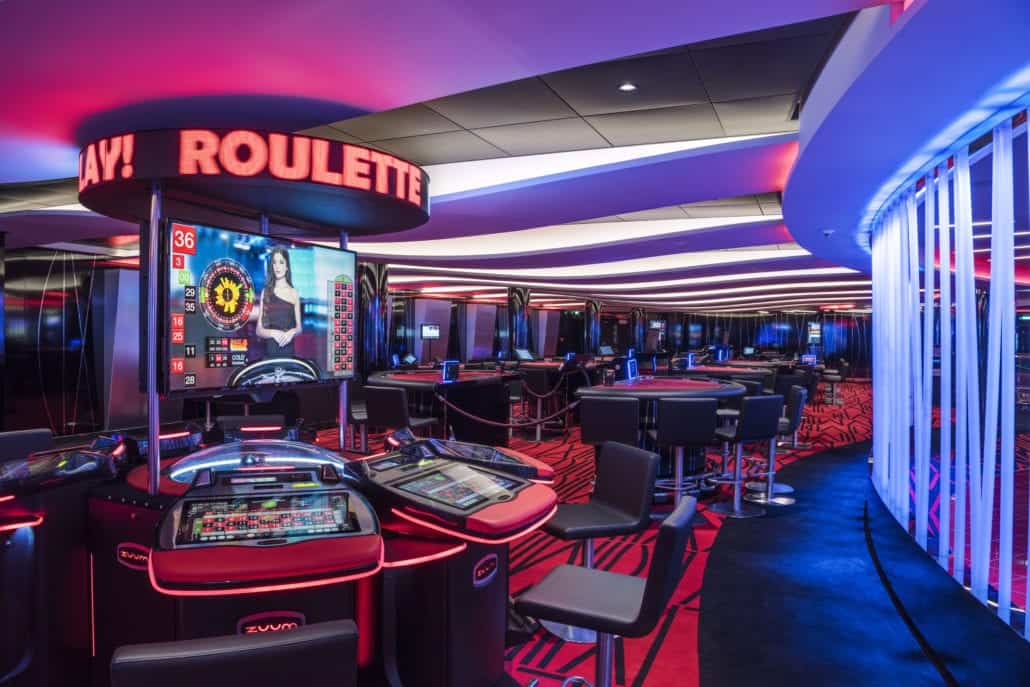
The lights, the low hum of conversation, the moment a slot reel locks into place while the ocean slides past outside.
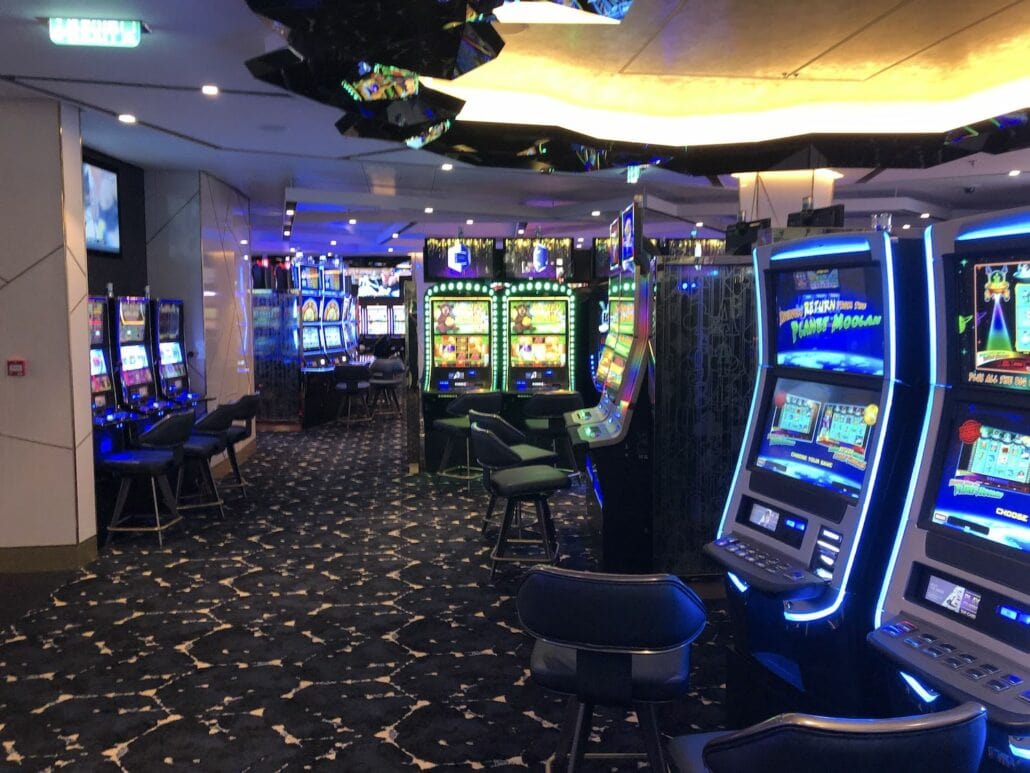
For a lot of cruisers, an hour at the tables after dinner is part of the rhythm of the trip. Then the ship docks, the casino closes for the day under maritime rules, and that pocket of entertainment goes quiet right when you have a slow afternoon ashore or a long evening back in the cabin.
That gap is the thing worth solving. Cruise casinos run on rules that have nothing to do with your mood and everything to do with where the ship is sitting. When the vessel is in port or within a country’s territorial waters, the casino has to close.
So the question for the modern cruiser is simple: When the onboard floor goes dark, what fills the space without blowing up your budget or your sense of fun?
One answer that keeps coming up is the sweepstakes casino, a free-to-play model that several people research before they ever board.
For readers who want a plain-language overview of how it works, PlayUSA’s sweepstakes casino guidance lays out the no-deposit angle in a way that does not require a gambling background to follow.
This piece is written for cruisers, not for casino regulars. The goal is to explain why the entertainment stops at port, what a sweepstakes model actually is, how it fits the realities of cruise connectivity, and how to keep the whole thing light and responsible. No hard sell, no promise of riches. Just a practical look at one option for the hours when the ship’s own casino is off limits.
Why the Onboard Casino Closes at Port
Cruise ship casinos do not operate on a whim. They open and close based on the ship’s position relative to land.
Once a vessel enters a country’s territorial waters, generally within a set distance of the coast, local gambling laws apply, and most cruise lines simply close the casino rather than juggle a patchwork of port rules. The casino reopens when the ship is back in international waters and the captain clears it.
For passengers, the practical effect is predictable. Long port days mean the casino is dark from morning until the ship sails. On itineraries with back-to-back ports, that can stretch across several daytime stretches in a row.
If you are someone who treats a bit of casino time as your way to unwind, the closure can land at exactly the wrong moment, like a rainy afternoon ashore or a quiet evening while half the ship is still off exploring.
This is not a flaw in cruise planning. It is just how maritime gaming works.
Knowing the pattern ahead of time lets you plan around it instead of being surprised by a roped-off casino entrance while the gangway is still down.
What a Sweepstakes Casino Actually Is
The phrase sweepstakes casino confuses people, so it helps to break it down. A sweepstakes casino is a free-to-play platform that uses a promotional model rather than direct wagering.
Instead of betting cash on each spin, you play with virtual currency. Most of these sites use a two-currency system: one type of coin is purely for fun and carries no prize value, while a second, more limited type can sometimes be redeemed for prizes under the site’s specific rules.
The legal backbone of this model is a phrase you have seen on cereal boxes and fast-food cups for decades: no purchase necessary.
Because there is always a free way to get the prize-eligible currency, the activity is treated as a promotional sweepstakes rather than traditional gambling. That free path is usually called an alternative method of entry, and it is what keeps the model on the consumer-promotion side of the line in most places.
The tone is different from real-money play too. You are not staking your vacation fund on a hand of blackjack.
The appeal is the gameplay itself, the spin, the round, the small thrill, without the pressure of watching real money drain away. For a cruiser who likes the casino atmosphere but does not want a financial hangover, that distinction matters.
How It Compares to the Onboard Floor
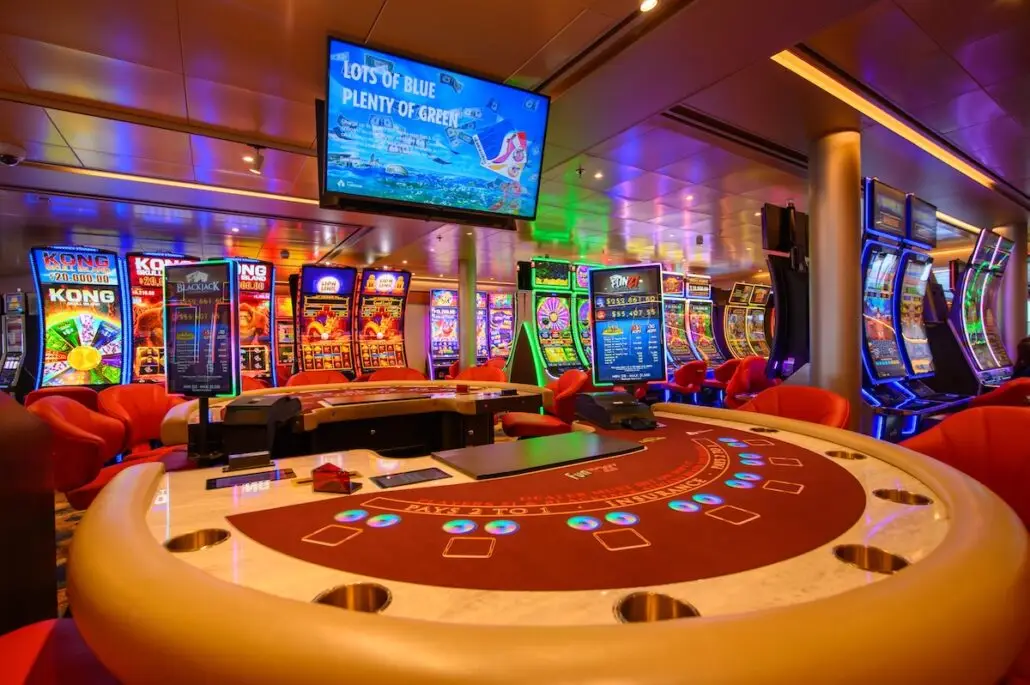
The two experiences are not interchangeable, and it would be dishonest to pretend they are. The onboard casino gives you a physical room, a dealer, the social buzz of strangers reacting to the same wheel.
A free-to-play app on your phone gives you convenience, no closing time tied to your location, and zero financial stakes if you stick to the free currency. Cruise Radio’s own look at cruise ship casinos versus online play makes the same point: each format delivers a different kind of thrill, and plenty of people enjoy both depending on the moment.
Here is a side-by-side that lays out the practical differences a cruiser actually feels.
| Factor | Onboard Cruise Casino | Free-to-Play Sweepstakes |
|---|---|---|
| Availability | International waters only | Anytime you have a connection |
| Financial stake | Real money | Free currency option, no required purchase |
| Atmosphere | Social, in-person, live dealers | Solo, screen-based, quiet |
| Dress and timing | Tied to onboard hours and policy | On your own schedule |
| Best for | Big-night-out energy | Filling quiet gaps, low pressure |
The honest read is that the onboard casino wins on atmosphere and the free-to-play option wins on flexibility. A balanced cruiser might use the ship’s floor for a planned night out and keep the free-to-play option in their pocket for the port-day lull.
The Connectivity Piece Most People Skip
None of this matters if you cannot get online, and for years that was the catch. Cruise internet used to be slow, expensive, and unreliable enough that streaming anything felt optimistic. That has changed fast. The shift to low-earth-orbit satellite service has reshaped what is possible at sea, with speeds and stability that were unthinkable a few years ago.
According to The Points Guy’s breakdown of Starlink on cruise ships, the low-orbit satellites sit roughly 340 miles above Earth, compared with about 22,000 miles for traditional satellites, which is why latency dropped so sharply.
The same report notes download speeds ranging from 25 to 220 Mbps across equipped vessels, and lists well over a dozen cruise lines that have rolled out the technology, including Carnival, Royal Caribbean, Norwegian, Princess, Viking, and Virgin Voyages, among others.
For the cruiser thinking about any online entertainment, the takeaway is straightforward. Connectivity is no longer the dealbreaker it once was on most major lines.
It still costs money, it can still throttle in heavy weather or in certain regional waters, and it is not a guarantee. But the baseline has moved enough that planning an online activity for a quiet hour is realistic on many modern ships.
Where You Are Allowed to Play
This is the part that trips people up, and it deserves a clear answer. Sweepstakes platforms are not available everywhere.
Availability is decided by where you are physically located, not by the cruise line, and the map has been shifting. Several states have moved to restrict or ban the model outright, and the list has grown over the past year. A platform that works in one home state may be unavailable in another.
For a cruiser, the practical wrinkle is location. When the ship is in international waters, you are outside any state’s jurisdiction, and many platforms will simply not function or will block access based on your detected location.
When the ship is near a coast or in port, your location may register as that region. The result is that access can be inconsistent depending on exactly where the ship is and which connection you are using.
The honest guidance here is to check the rules for your own home state before you sail, and to understand that access at sea is unpredictable. Treat any onboard access as a bonus, not a plan. If playing during the cruise matters to you, read the platform’s terms about geographic restrictions first rather than assuming it will work the moment you leave the dock.
Setting a Real Budget, Even When Play Is Free
Free-to-play does not mean cost-free attention. Even with a no-purchase model, these platforms are designed to be engaging, and the option to buy more virtual currency is usually a tap away. The discipline that protects your cruise budget is the same discipline that protects your time.
Decide before you start whether you are treating this purely as free entertainment. If the answer is yes, commit to the free currency and the alternative method of entry, and skip the purchase prompts entirely. If you do choose to spend, set a hard number that fits your overall vacation budget the same way you would cap your spending in the onboard casino. A cruise has a hundred small ways to nudge you into spending more, and a phone game is one more of them.
A simple rule keeps it healthy: this is a way to pass a quiet hour, not a way to fund the trip or chase a loss. The moment it starts feeling like the second thing, it has stopped being entertainment.
Fitting It Into the Cruise Day Without Missing the Cruise
The biggest risk with any onboard screen activity is not money. It is missing the cruise. You did not book a balcony and a packed shore-excursion list to stare at a phone in a dim cabin. The point of having a low-pressure option for the dead hours is that it stays in the dead hours.
Good moments for it are the genuine gaps: a slow sea-day afternoon when the pool is packed, the hour before a late dinner seating, a port stop you have chosen to skip, or a restless half hour after lights-out in the cabin. Bad moments are the ones you will remember the trip by, like sail-away, the headline show, or a sunset on deck. If a quiet game starts crowding out the reasons you booked the cruise, the trade has gone the wrong way.
A useful habit is to tie the activity to a specific window. Twenty minutes while the coffee kicks in, then put it away and go do something the ship is famous for. The cruise should always win the calendar.
Keeping It Responsible at Sea
Responsible play is not a footnote, and it is arguably more important on a cruise because the normal guardrails are looser. You are on vacation, the routine is gone, drinks may be flowing, and time blurs. All of that makes it easier to play longer than you meant to, whether on the onboard floor or on a phone.
Set limits before you sail and write them down if you have to. Time limits matter as much as money limits. Use the self-control tools that reputable platforms build in, and treat any feeling of needing to win something back as the clear signal to stop. If gambling in any form has ever been a problem for you, a cruise is not the place to test it, and the safest move is to leave it off the itinerary entirely.
The healthiest framing is the same one that applies to the dessert buffet and the duty-free shop. It is there if you want it, in moderation, and it is not the reason you came. Keep it in that lane and it stays a small, harmless part of the trip.
A Quick Pre-Cruise Checklist
Before you sail, a few minutes of prep saves a lot of confusion at sea. Confirm your ship’s internet situation, since packages and speeds vary widely by line and tier. Check whether the activity you are interested in is even available in your home state, because that is what often determines access. Decide your budget and your time limits in advance, and put them somewhere you will actually see them.
It also helps to know your ship’s casino hours and port schedule so you understand exactly when the onboard floor will be dark. That tells you which gaps you might fill and which you should leave for the cruise itself. A little planning turns a vague idea into a clean, low-stress part of the trip rather than a source of frustration when something does not work the way you expected.
The Bottom Line for Cruisers
The cruise casino closing at port is not a problem to be angry about. It is just a feature of how the ship operates. The useful response is to know the pattern and decide ahead of time how you want to handle the quiet hours. For some people, the answer is a book and a balcony. For others, a free-to-play option fills the gap without real-money pressure and without waiting on the ship’s position.
The model is not magic and it is not for everyone. Availability is restricted by location, connectivity still costs money, and the free-to-play framing only protects you if you actually stick to it.
But for a cruiser who likes a little casino energy and wants it on their own schedule, it is a reasonable tool to understand before sailing. Plan it, budget it, cap the time, and keep the cruise itself at the center of the trip. Do that, and the fun does not have to stop at port.
Frequently Asked Questions
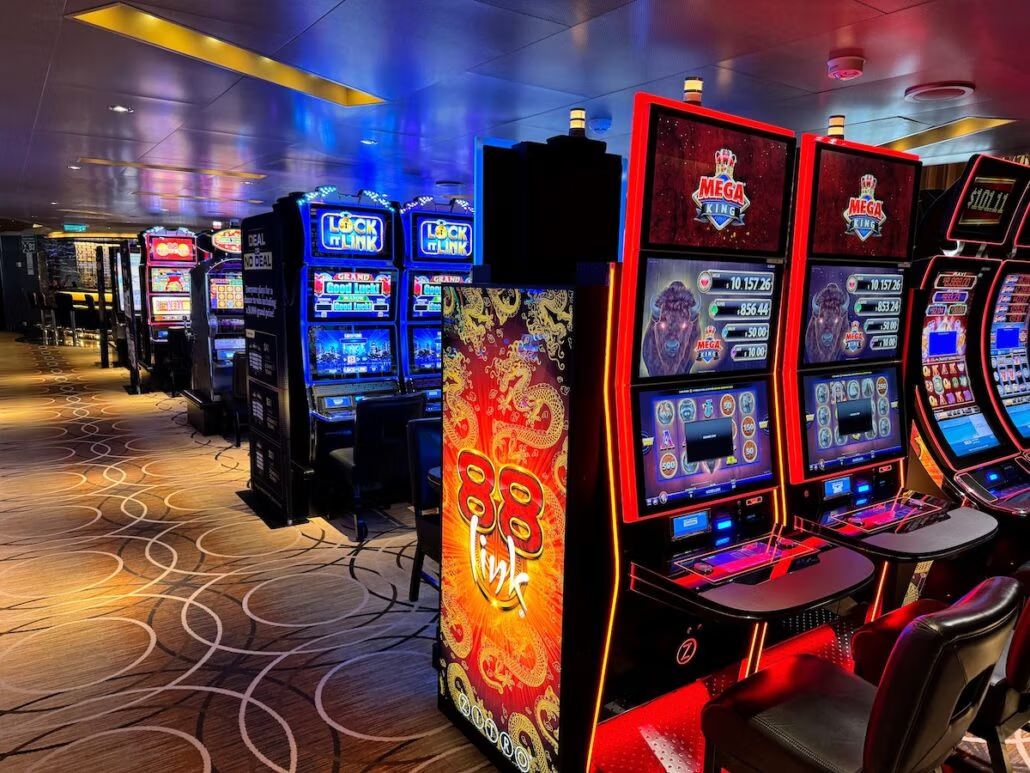
Why does the cruise ship casino close when we are in port?
Cruise casinos must close once the ship enters a country’s territorial waters, because local gambling laws then apply. Rather than manage a different rule for every port, most lines simply shut the casino until the ship returns to international waters. The captain reopens it once the vessel is cleared.
Is a sweepstakes casino the same as real-money online gambling?
No. A sweepstakes model is a free-to-play promotion built around a no-purchase-necessary structure, which is what separates it legally from traditional gambling. You can play with free virtual currency obtained through an alternative method of entry. That free path is the core difference, even though some sites also let you buy currency.
Will the internet on my cruise be fast enough for online play?
On many major lines it can be, thanks to the shift to low-earth-orbit satellite service that has sharply improved speeds and reliability. It still costs money, varies by package, and can slow down in bad weather or certain regional waters. Check your specific ship’s internet options before you sail rather than assuming.
Can I use a sweepstakes platform anywhere on the cruise?
Not reliably. Access depends on your physical location, and many platforms block or restrict use based on where you are, including international waters and states that have banned the model. Check your home state’s rules before sailing and treat any access at sea as a bonus, not a guarantee.
How do I keep this from taking over my vacation?
Set time and money limits before you board and tie the activity to genuine quiet gaps like slow sea-day afternoons. Skip it for the moments you actually booked the cruise for, such as shows, sail-away, and sunsets. If it ever starts feeling like more than light entertainment, that is the signal to put it away.